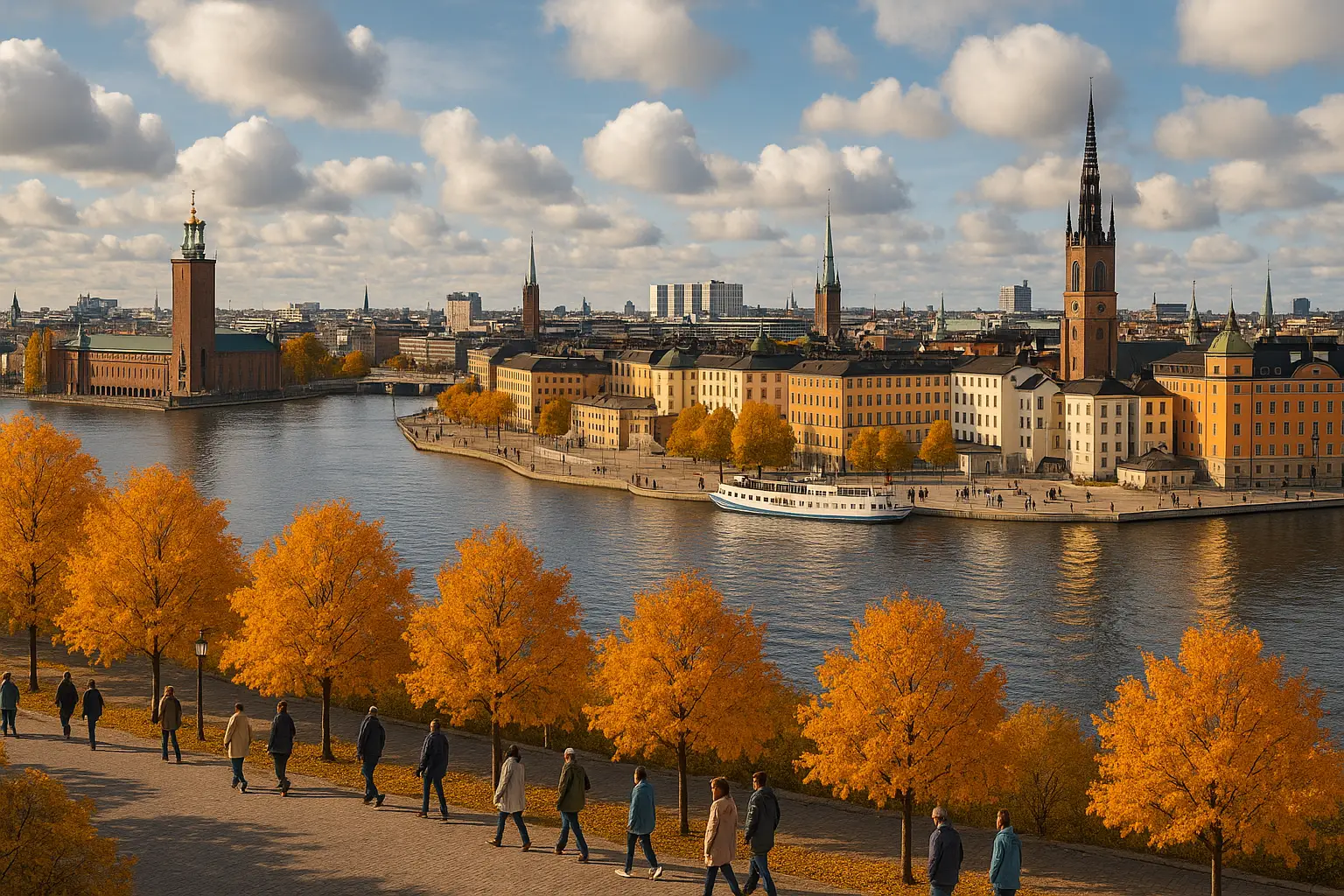
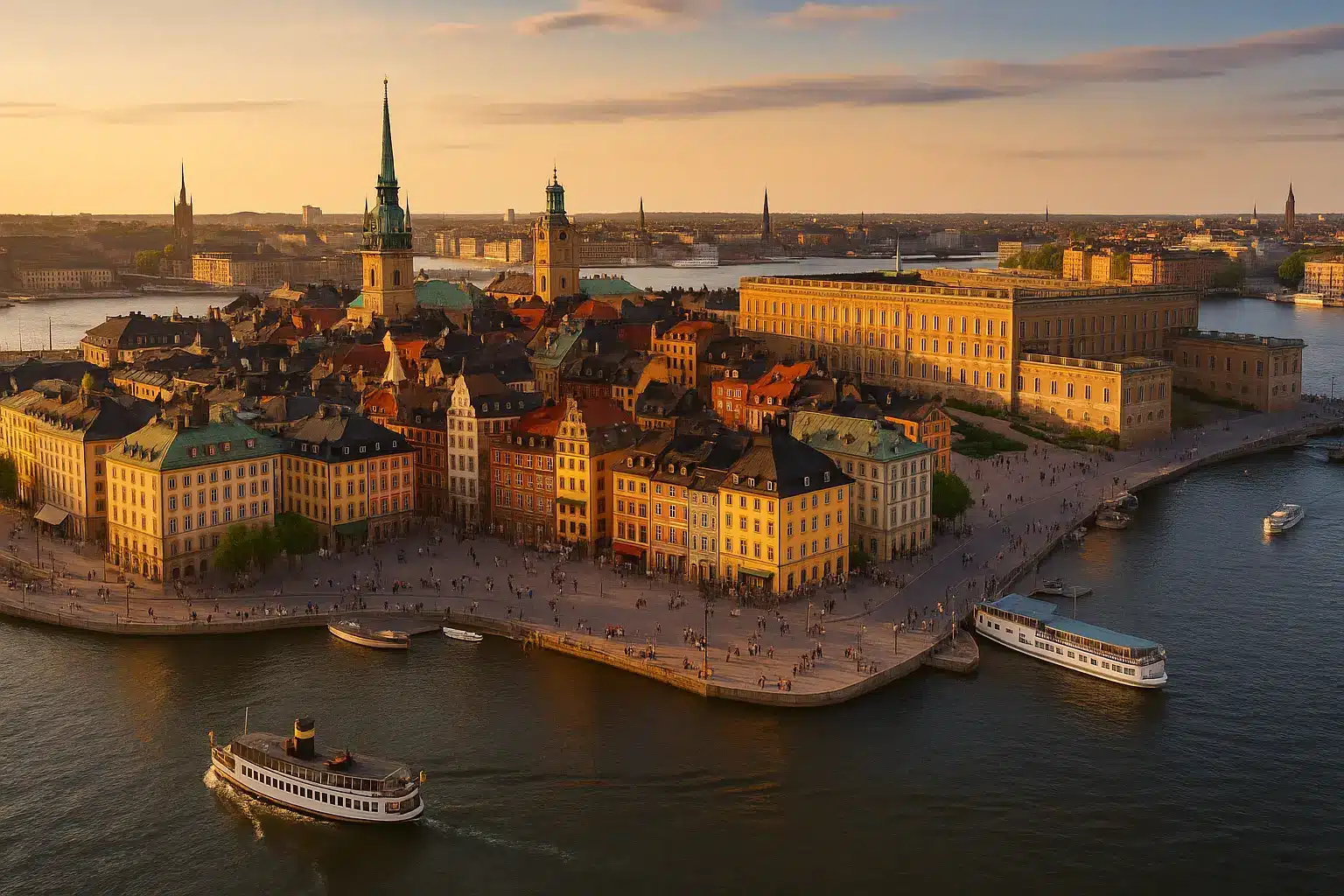
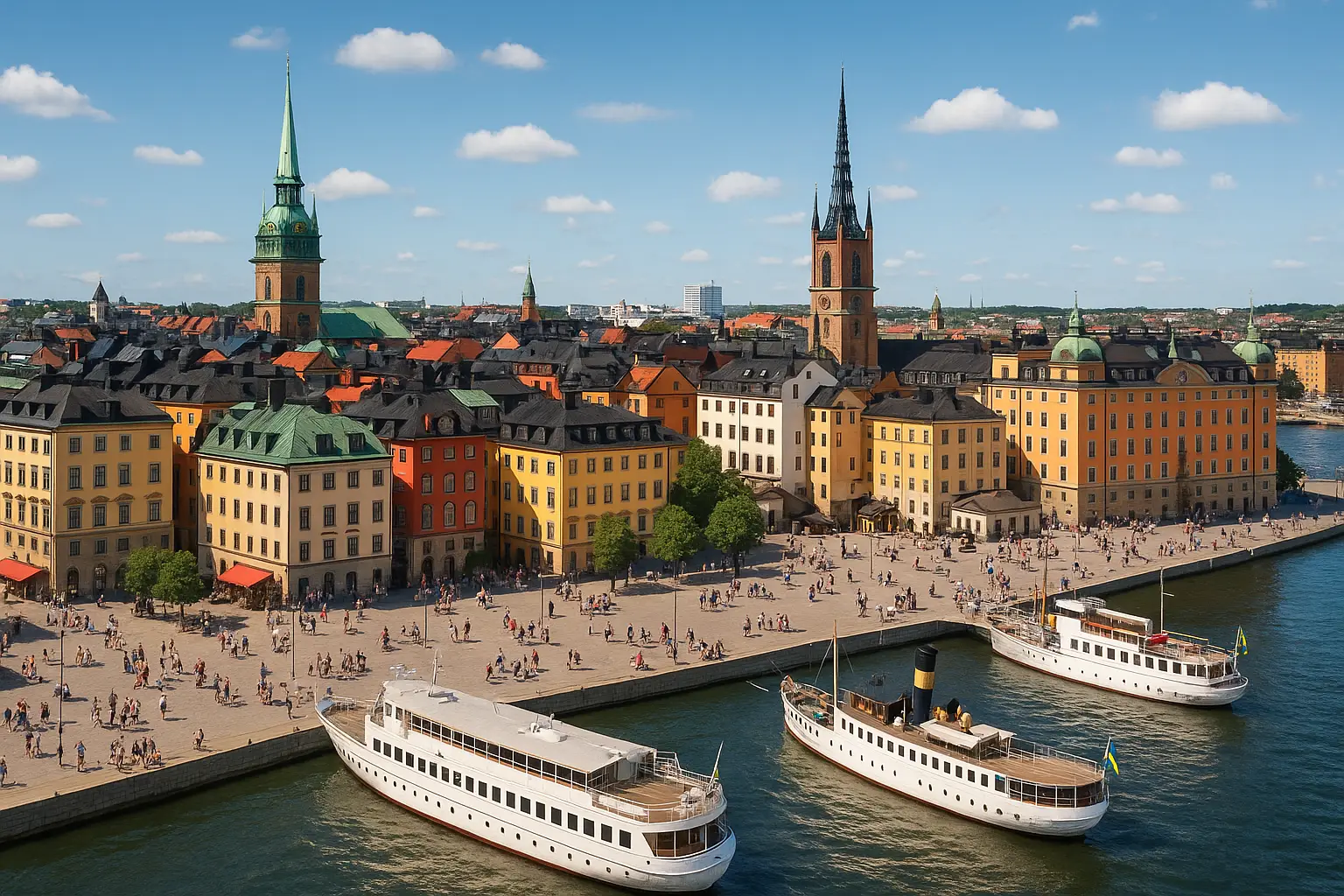
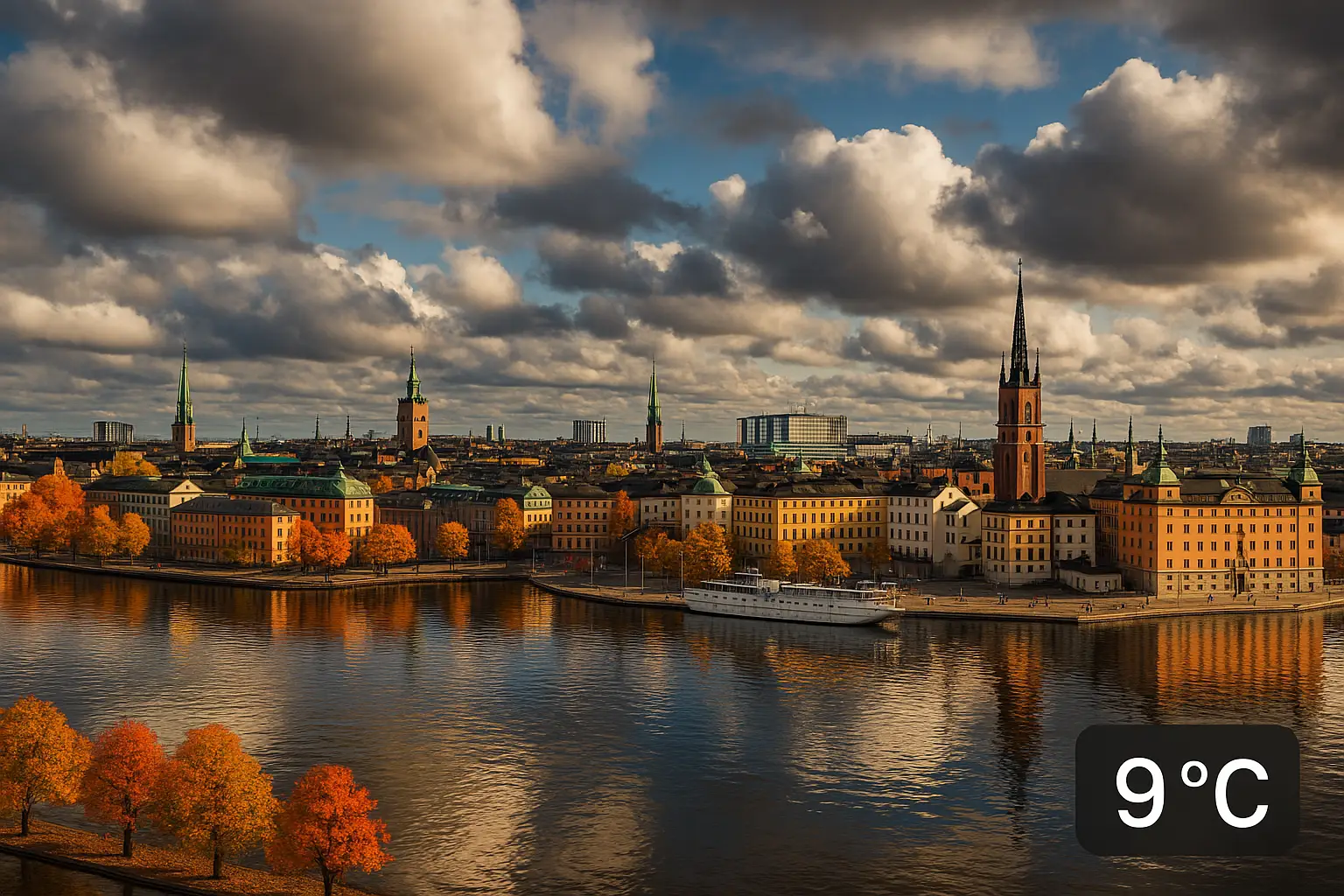
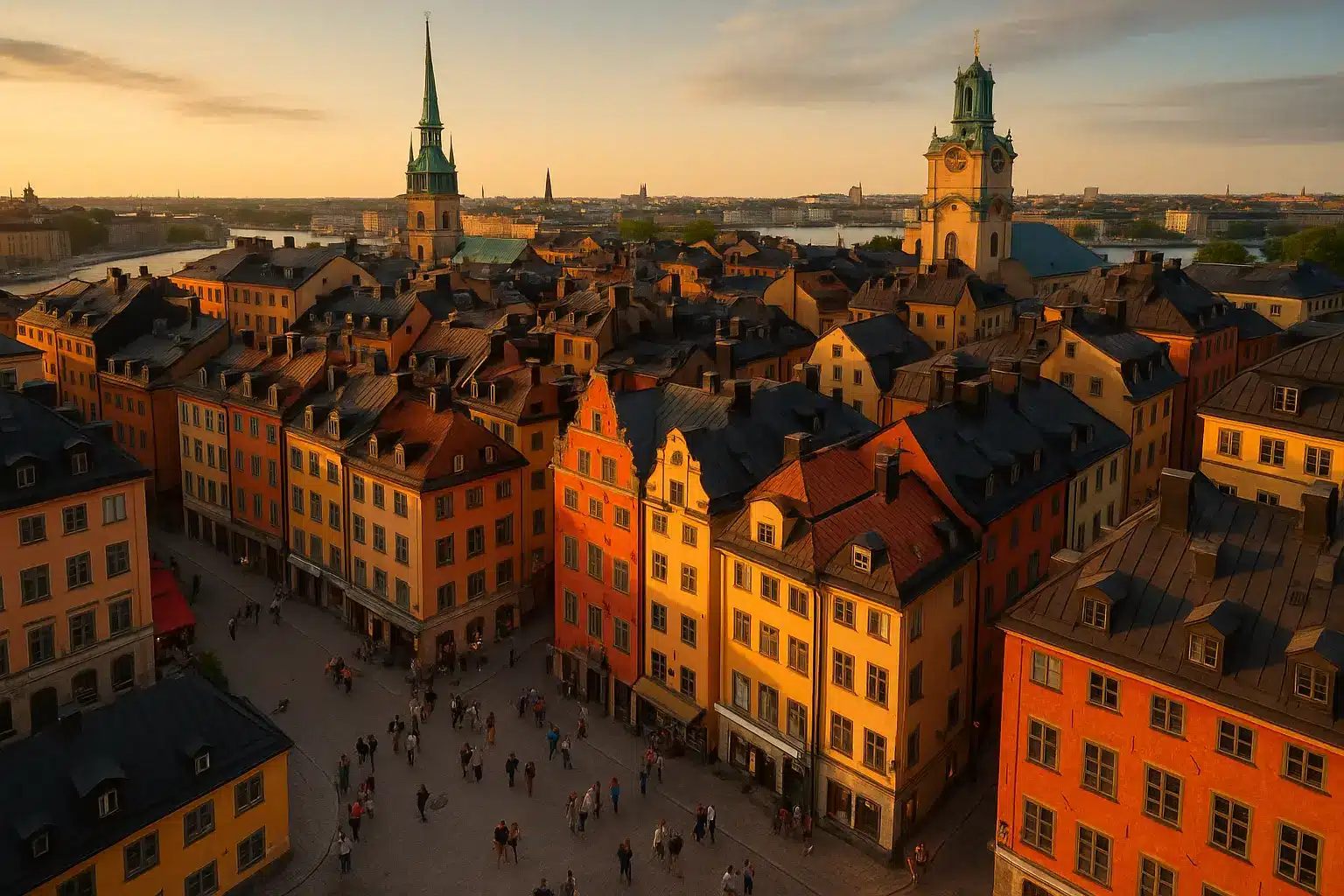
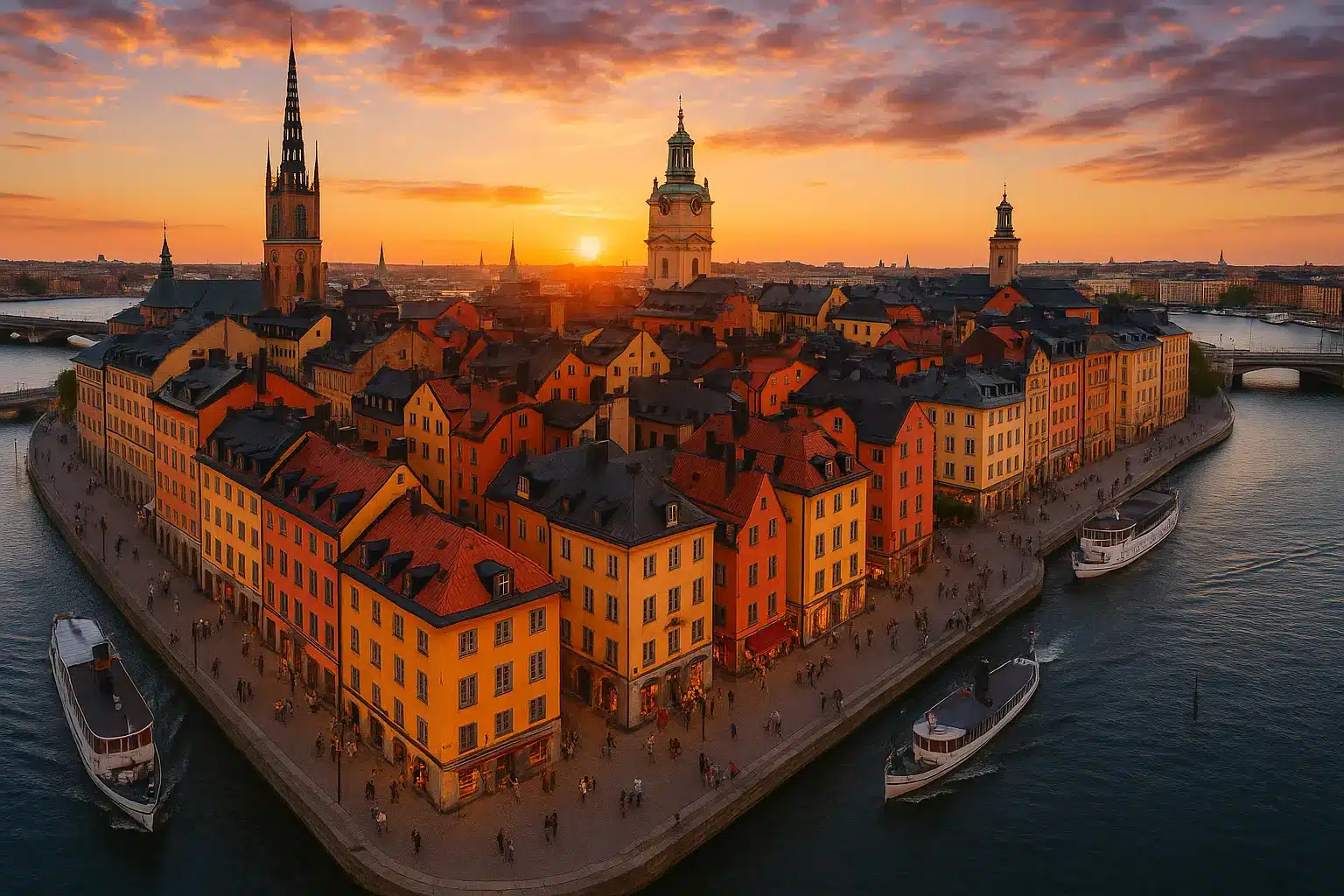
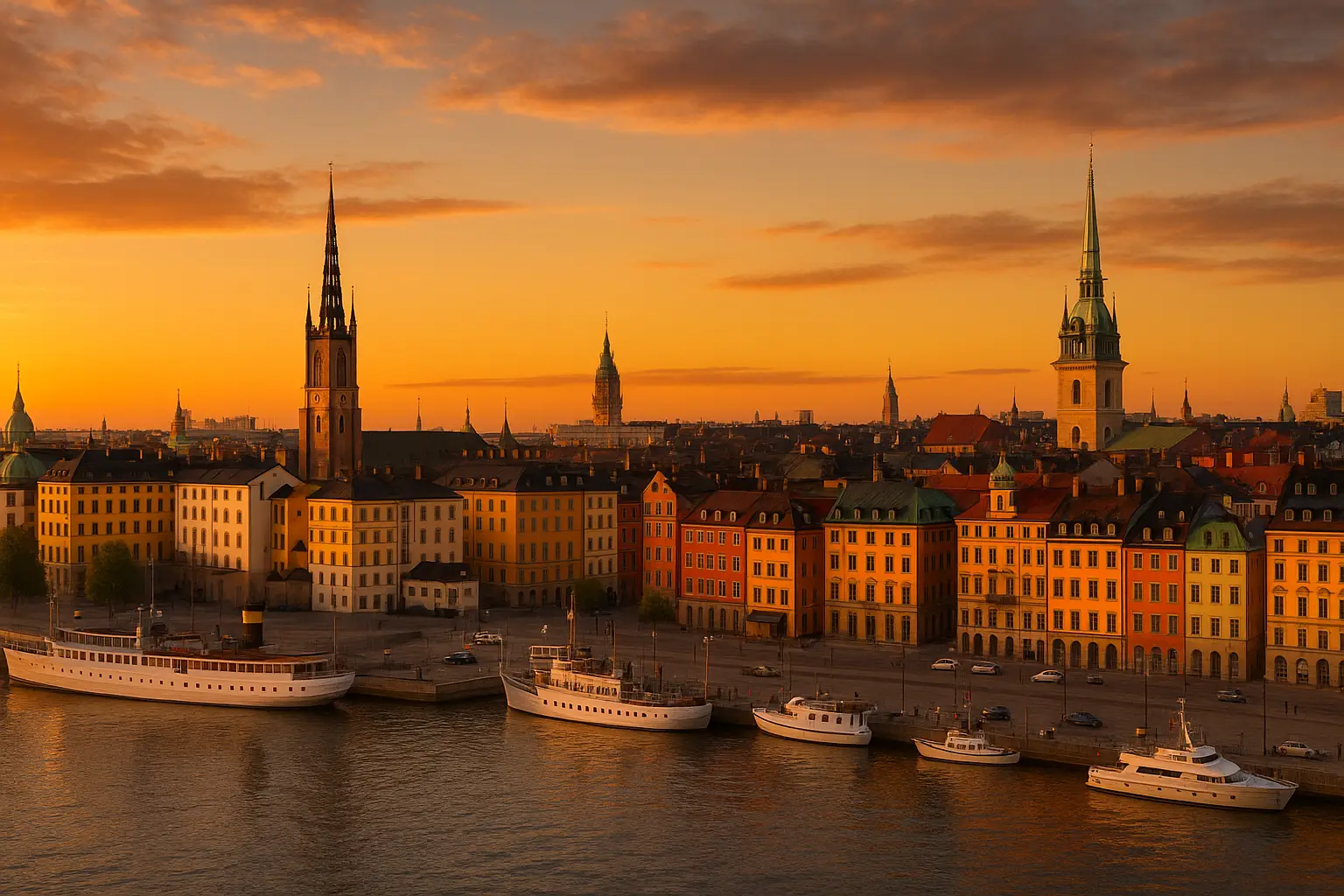
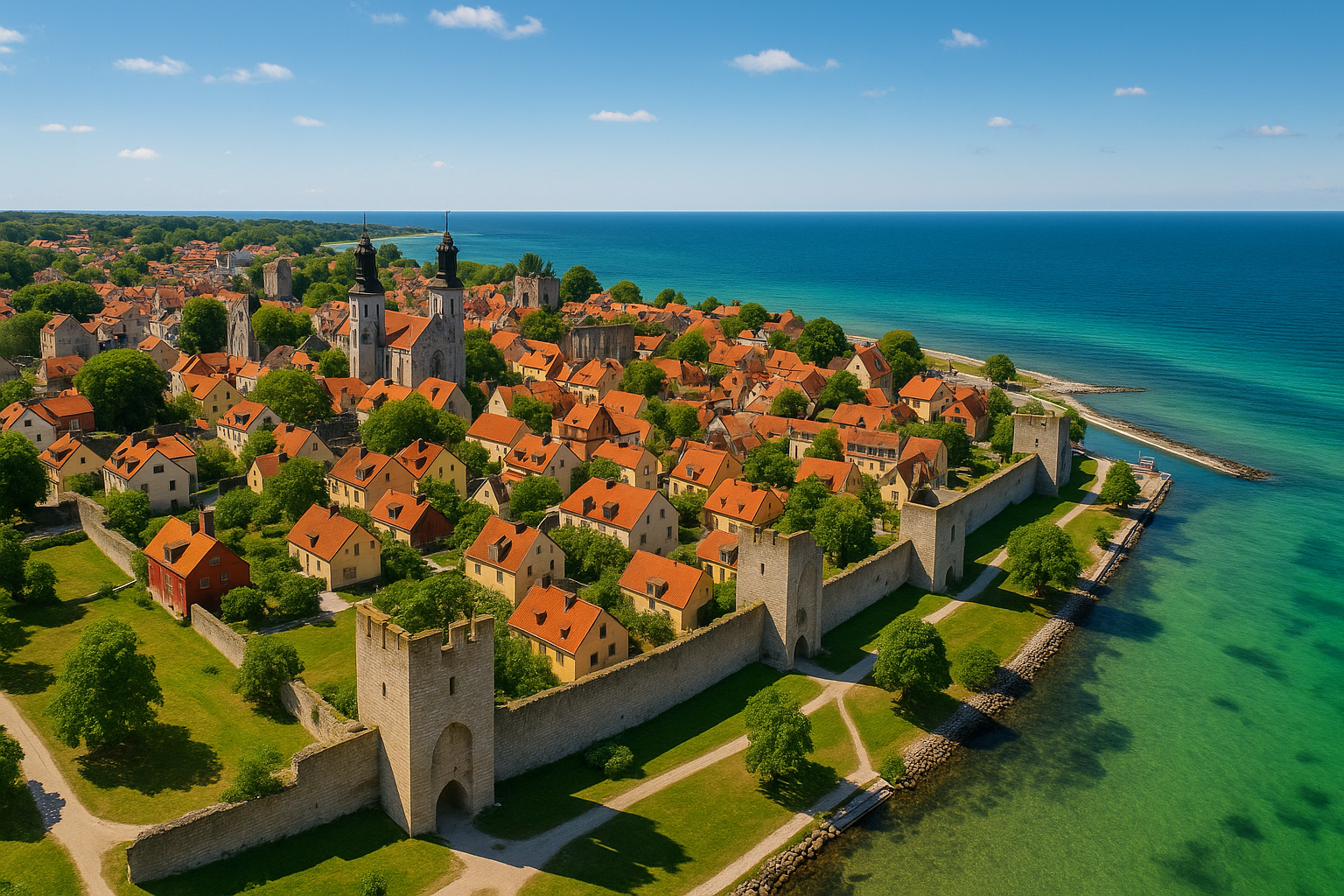
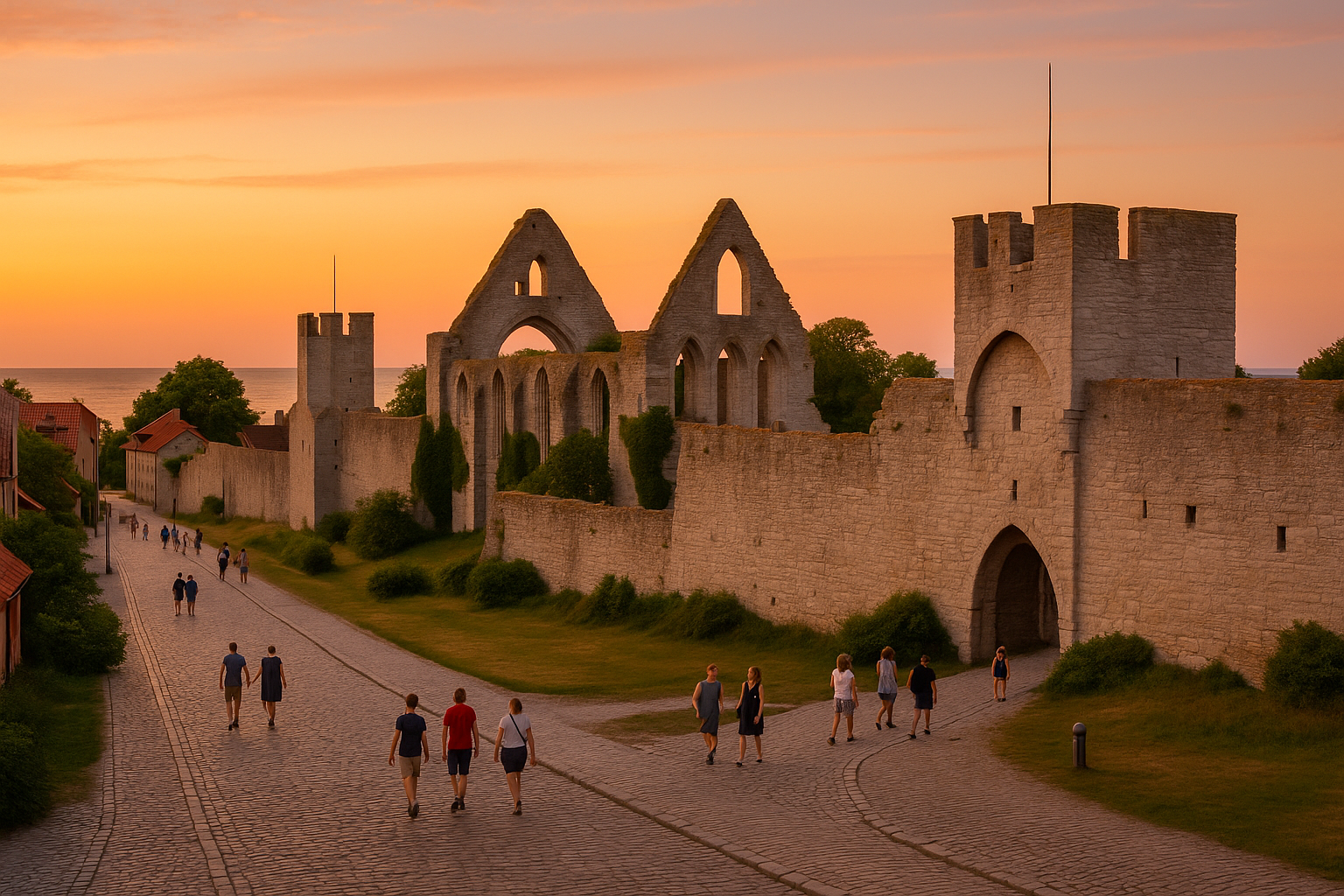
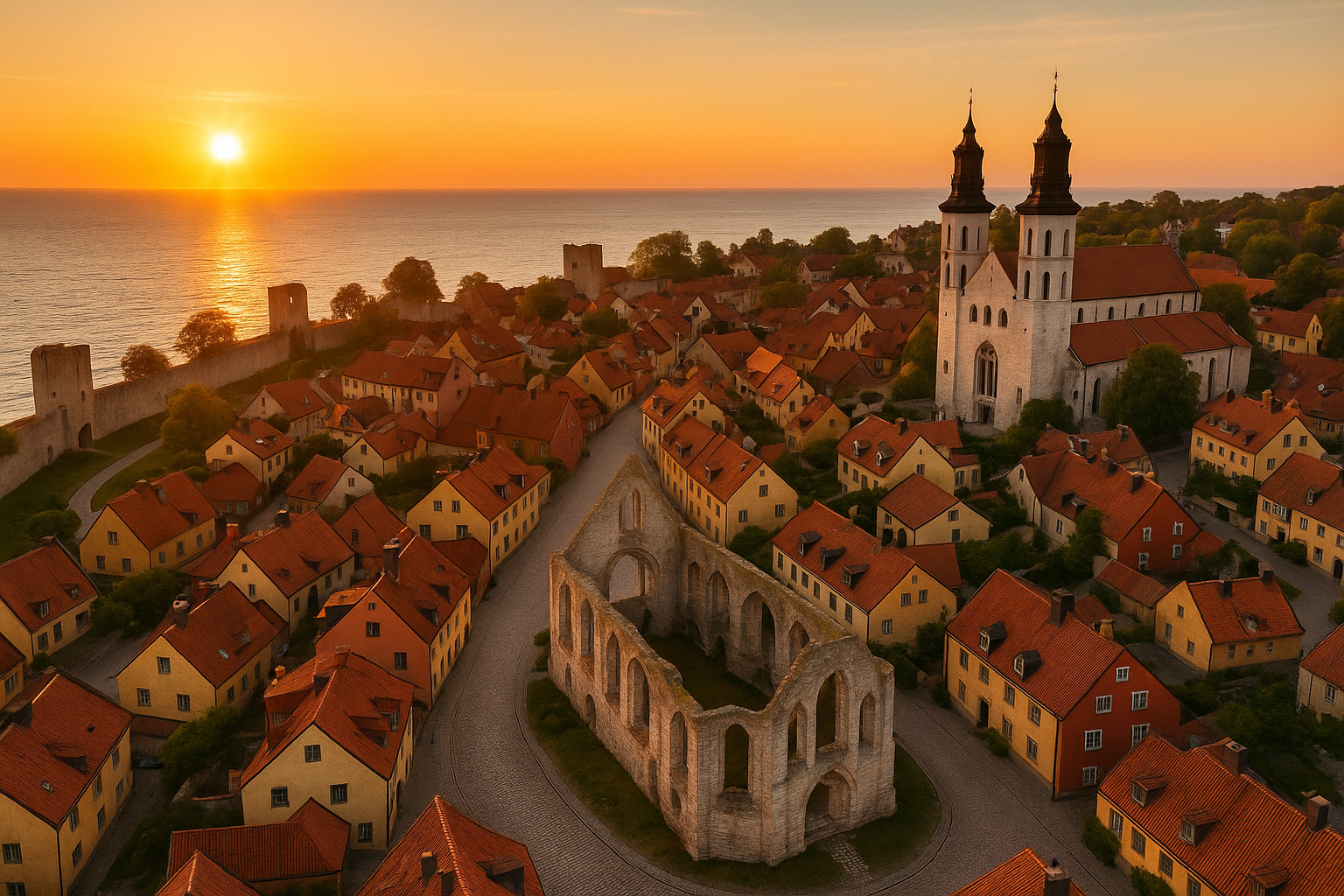
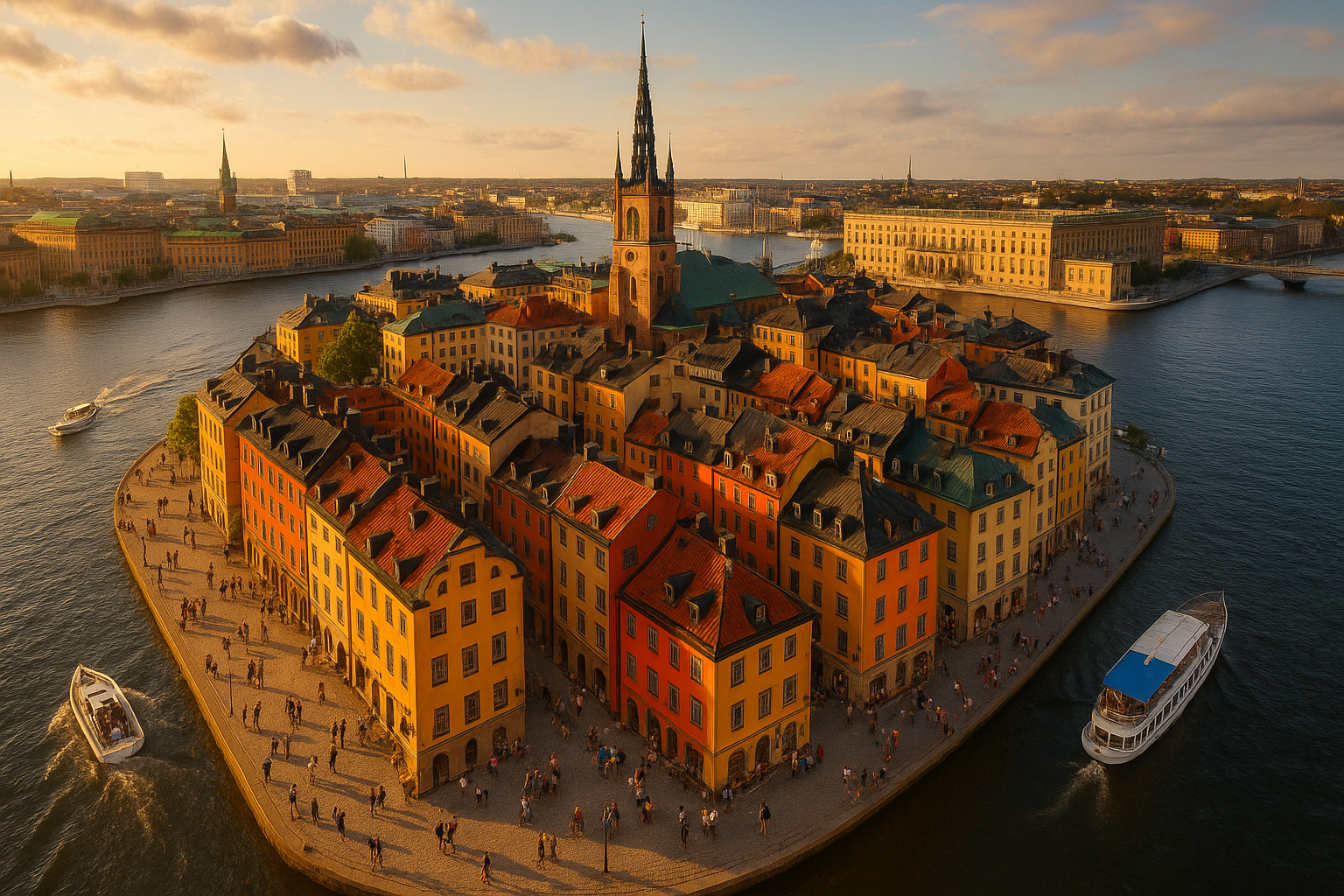
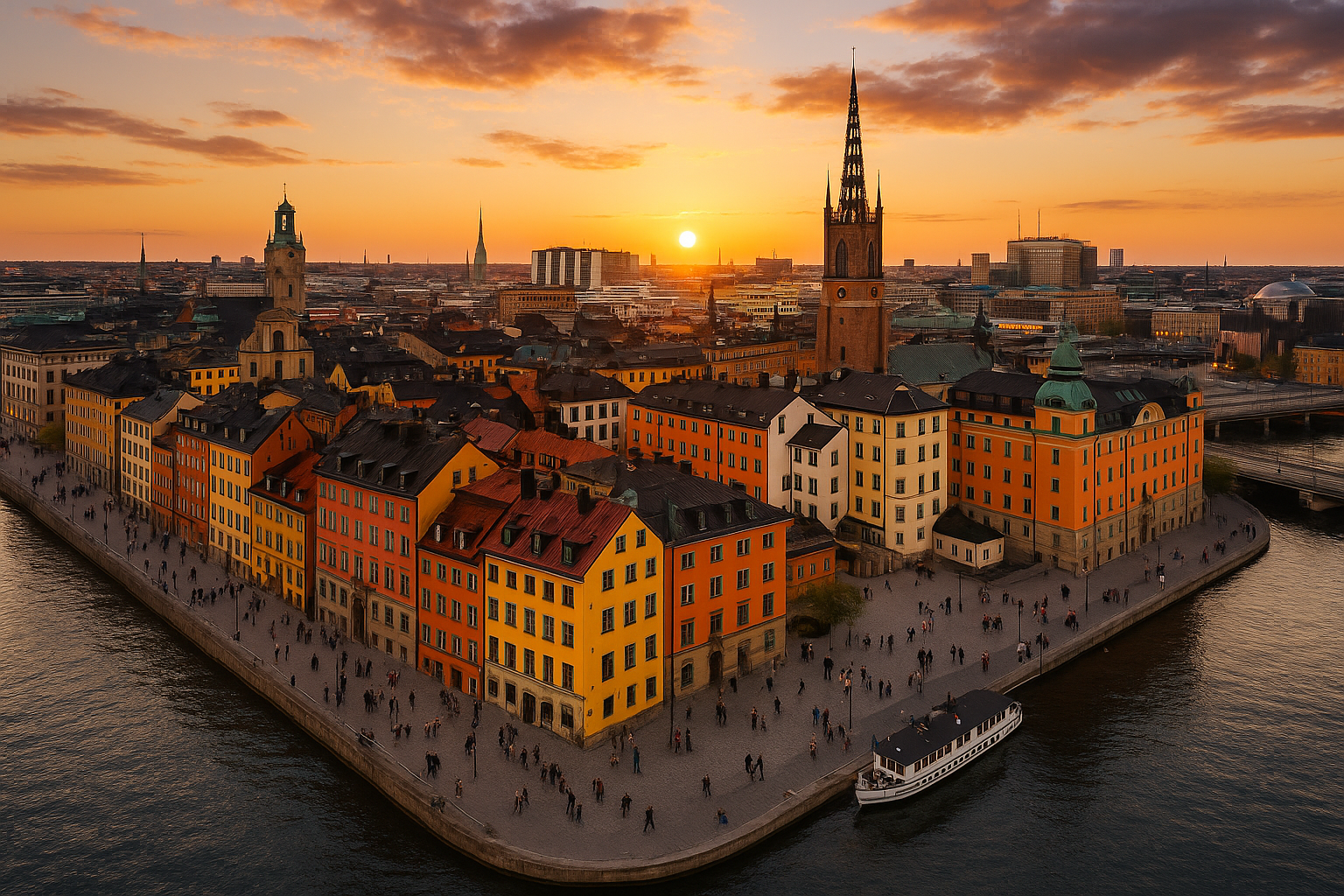
Nestled in the heart of Stockholm, Gamla Stan (Old Town) stands as a mesmerizing testament to Sweden’s rich medieval history. With its narrow cobblestone streets, ochre-colored buildings, and centuries-old architecture, this charming district offers visitors a journey through time unlike any other in Scandinavia.
Founded in the 13th century, Gamla Stan remains one of Europe’s best-preserved medieval city centers. Today, this compact island neighborhood serves as both a living museum and a vibrant urban space where history and modern life seamlessly intertwine.
Gamla Stan’s story begins in 1252 when it was established by Birger Jarl as a fortified trading post. Originally called ”Staden mellan broarna” (The Town Between the Bridges), this settlement eventually grew into what we now know as Stockholm.
Throughout the centuries, Gamla Stan has weathered wars, fires, and political upheavals while maintaining its distinctive character. The district’s architecture reflects various periods of Swedish history, from medieval buildings to baroque facades added during the 17th and 18th centuries.
According to , the name ”Gamla Stan” only came into use in the 20th century, after newer districts had been established around the original island city.
At the corner of Prästgatan and Kåkbrinken streets lies a remarkable piece of Viking heritage hidden in plain sight. Embedded in a building’s wall is an 11th-century rune stone, predating the founding of Stockholm itself. This carved message from the Viking age serves as a tangible connection to Sweden’s ancient past.
As noted by , this runestone (known as Uppland Runic Inscription 53) was likely a memorial stone before being incorporated into the building’s foundation.
Measuring just 90 centimeters (35 inches) at its narrowest point, Mårten Trotzigs Gränd holds the title of Stockholm’s smallest street. This atmospheric alleyway features 36 steep steps and provides a uniquely intimate glimpse into medieval urban planning.
According to , the alley is named after a 16th-century merchant and was nearly forgotten until its rediscovery and restoration in the 20th century.
Tucked away in a courtyard near Bollhusgränd is Järnpojke (Iron Boy), Stockholm’s smallest public sculpture. Standing just 15 centimeters tall, this charming little statue is the subject of local folklore. Visitors often rub his head for good luck and leave small offerings like coins or even tiny hats during winter.
Created by artist Liss Eriksson in 1967, the statue has become one of Gamla Stan’s most beloved attractions despite its diminutive size, as .
In Stortorget, Gamla Stan’s main square, lies a subtle reminder of one of Sweden’s darkest historical chapters. The Stockholm Bloodbath of 1520 saw Danish King Christian II execute scores of Swedish noblemen in this very location. Look for the peculiar white, red, and black stones in the square’s buildings—they’re said to represent the heads, blood, and bodies of those executed.
This tragic event helped spark Sweden’s war of liberation, ultimately leading to the establishment of the Swedish national state under Gustav Vasa.
This small, tranquil square hides a dramatic history. Named ”The Burnt Lot” after a devastating fire in the 18th century, it now offers a peaceful refuge with its signature chestnut tree. Literary enthusiasts will appreciate that Swedish author August Strindberg often mentioned this spot in his works.
As , Brända Tomten exemplifies how urban spaces can evolve while preserving historical narratives.
While Stockholm’s Royal Palace is a well-known landmark, few visitors discover its less frequented areas. With over 600 rooms, it’s one of Europe’s largest palaces still used for its original purpose. The Tre Kronor Museum within the palace offers a fascinating glimpse into the medieval castle that once stood on this site before burning down in 1697.
According to , the palace houses five museums in total, each offering distinct insights into Swedish royal history.
Beneath Gamla Stan’s streets lies a network of medieval cellars, some dating back to the 13th century. These underground spaces once served as storage facilities, workshops, and even housing for the city’s poorest residents.
Today, some have been transformed into atmospheric restaurants and shops, while others can be explored through that reveal this hidden subterranean world.
The Riddarhuset (House of Nobility) boasts an extraordinary artistic treasure often overlooked by visitors. Its grand hall ceiling displays over 2,300 coats of arms representing Sweden’s noble families, creating a stunning visual tapestry of heraldic art.
Built between 1641 and 1674, this impressive baroque building continues to serve as a center for preserving noble heritage, as .
Near the famous narrow alley, an ornate iron spiral adorns a building facade. This artistic detail represents the merchant Mårten Trotzig’s initials and serves as a reminder of the wealth that once flowed through Gamla Stan’s trading houses.
According to , such architectural details throughout Gamla Stan tell the stories of its former residents.
Tyska Kyrkan (the German Church) contains beautifully preserved medieval paintings and sculptures that survived the Protestant Reformation’s iconoclasm. This architectural gem reflects the influence of German merchants who played a crucial role in Stockholm’s early development.
As , the church’s interior artwork provides important insights into pre-Reformation religious practices in Sweden.
The best way to experience Gamla Stan is on foot. The district’s compact nature makes it perfect for walking tours that bring its history to life. offer expert insights, while self-guided explorations allow you to discover hidden corners at your own pace.
For a comprehensive experience, follow the main streets of Västerlånggatan and Österlånggatan before venturing into the labyrinth of smaller alleys that branch off them.
Gamla Stan transforms throughout the year with seasonal celebrations:
Gamla Stan offers countless opportunities to sample Swedish cuisine in historic settings:
Each season offers a different perspective on Gamla Stan:
For a perfect balance of good weather and manageable crowds, consider visiting in late May or early September.
Gamla Stan is easily accessible by public transportation:
As , exploring the surrounding areas by foot or ferry offers beautiful views of the Old Town from different perspectives.
Gamla Stan simply means ”Old Town” in Swedish. It refers to the original medieval center of Stockholm, founded in the 13th century.
While you can walk through Gamla Stan in a couple of hours, dedicating at least half a day allows you to explore museums, enjoy a meal, and discover hidden corners. History enthusiasts might want to spend a full day.
Yes! Walking the streets costs nothing, and you can view many historical sites from the outside for free. The changing of the guard at the Royal Palace is also free to watch, as are visits to several churches in the area.
The ancient rune stone is embedded in a building wall at the corner of Prästgatan and Kåkbrinken streets. It’s freely accessible and visible from the street.
Mårten Trotzigs Gränd holds this title, measuring just 90 centimeters (about 35 inches) at its narrowest point. It features 36 steps and connects Västerlånggatan and Österlånggatan.
Gamla Stan presents challenges for wheelchair users due to its cobblestone streets and occasional steps. However, main streets like Västerlånggatan are more accessible, and many restaurants and shops have made accommodations. The Stockholm tourism office can provide specific accessibility information.
Gamla Stan offers a perfect blend of history, culture, and charm that continues to captivate visitors from around the world. Whether you’re drawn to its Viking-era relics, royal heritage, or simply the ambiance of its medieval streets, Stockholm’s Old Town promises an unforgettable journey through Swedish history.