Biography and Early Life of Carl Linnaeus
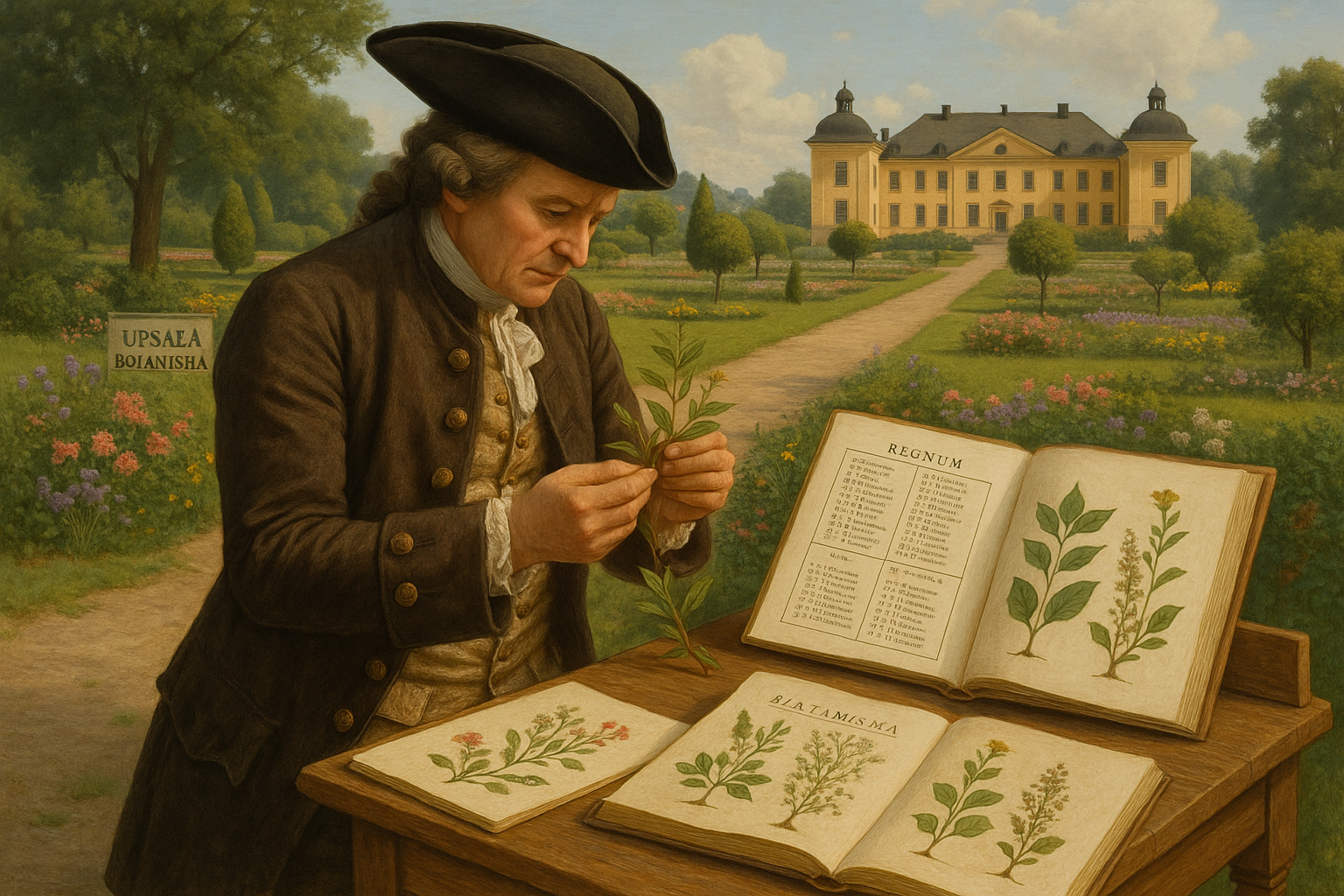
Carl Linnaeus, often referred to as the father of modern taxonomy, was born on May 23, 1707, in Råshult, Småland, Sweden. Born into a family with a strong Lutheran background, his early interest in plants was nurtured by his father, Nils Ingemarsson Linnaeus, who was both a pastor and an avid gardener. His mother, Christina Brodersonia, came from a family of ministers, further establishing Linnaeus’ connections to educated Swedish society of the time.
Education and Early Career
Linnaeus showed an exceptional aptitude for botany from a young age. Despite his father’s wishes for him to enter the clergy, his academic path was shaped by his botanical interests. His formal education took him through several institutions:
- Växjö Cathedral School (1717-1727), where his interest in botany was recognized by Dr. Johan Rothman
- Lund University (1727), where he studied medicine for a brief period
- Uppsala University (1728-1731), where he studied medicine and botany
While studying at Uppsala, Linnaeus began to develop his ideas about plant classification that would later revolutionize natural science. According to historical records documented by Wikipedia, Linnaeus started teaching at Uppsala University from 1730, even before completing his medical degree.
| Key Event | Year | Significance |
|---|---|---|
| Birth | 1707 | Born in Råshult, Småland |
| Uppsala University | 1728 | Began studies in medicine and botany |
| Lapland Expedition | 1732 | Collected and cataloged specimens |
| Systema Naturae | 1735 | First publication of his classification system |
| Professor at Uppsala | 1741 | Appointed Professor of Medicine, later Botany |
| Ennoblement | 1761 | Became Carl von Linné |
| Death | 1778 | Died in Uppsala |
Scientific Contributions
Linnaeus’ most significant contribution to science was his development of a hierarchical classification system for plants and animals. This system, now known as Linnaean taxonomy, formed the foundation of modern biological classification and nomenclature.
The Taxonomy System
The Linnaean system introduced a standardized method for naming, ranking, and classifying organisms. Its most revolutionary aspect was binomial nomenclature—a two-part naming system where each species receives a two-word Latin name: the genus name followed by the specific epithet. According to Britannica’s biography, Linnaeus formalized this system in his groundbreaking work ”Systema Naturae” (1735).
The hierarchical classification levels introduced by Linnaeus include:
- Kingdom
- Class
- Order
- Genus
- Species
This structure, while expanded in modern taxonomy, remains the fundamental framework for biological classification today.
Major Works and Discoveries
Linnaeus was a prolific writer, publishing numerous scientific works throughout his career. His most influential publications include:
| Publication | Year | Significance |
|---|---|---|
| Systema Naturae | 1735 | Introduced his classification system |
| Species Plantarum | 1753 | Cataloged all known plant species (approximately 7,700) |
| Genera Plantarum | 1737 | Detailed descriptions of plant genera |
| Philosophia Botanica | 1751 | Established principles of botanical taxonomy |
Beyond his classification system, Linnaeus made significant contributions to various scientific fields, including medicine, zoology, and ecology. His students, often referred to as ”Linnaeus’ apostles,” traveled the world collecting specimens and extending his work.
Personal Life and Family
In 1739, Linnaeus married Sara Elisabeth Moræa, daughter of a physician. Their union produced six children: four daughters (Elisabeth Christina, Lovisa, Sara Christina, and Sophia) and two sons (Carl and Johannes). His son Carl Linnaeus the Younger (often referred to as Linnaeus filius) followed in his father’s footsteps as a botanist.
Linnaeus was known for his energetic personality and enthusiasm for natural science. He maintained extensive correspondence with scientists throughout Europe, building a vast network of collaborators who contributed to his collections and research.
Later Years
In 1761, Linnaeus was ennobled by King Adolf Frederick of Sweden in recognition of his scientific achievements. With this honor, he took the name Carl von Linné. The final decades of his life were marked by declining health, including several strokes. He died on January 10, 1778, in Uppsala, where he had spent most of his professional life.
Legacy and Controversies
Scientific Impact
Linnaeus’ system of classification has endured for nearly 300 years, though it has been modified and expanded with advances in scientific knowledge, particularly in genetics and evolutionary biology. His methods standardized scientific communication about species and created a framework that enabled the organization of expanding biological knowledge.
Physical reminders of his legacy include:
- The Linnean Society of London, founded in 1788, which houses his collections
- The Linnaeus Garden and Museum in Uppsala, Sweden
- Numerous plant and animal species named in his honor, including the twinflower Linnaea borealis, his favorite plant
Modern Controversies
While Linnaeus is celebrated for his scientific achievements, contemporary scholars have also examined the more problematic aspects of his work, particularly his classification of human beings. In his taxonomic system, Linnaeus divided humans into four varieties based on geography and perceived physical characteristics, attributing behavioral and moral traits to each group.
According to research published in the Journal of Medical Biography, these racial classifications, though revolutionary in recognizing humans as part of the animal kingdom, also contributed to scientific racism that influenced later race biology. Modern scientific understanding completely rejects these racial classifications as lacking scientific validity.
Interesting Facts About Carl Linnaeus
Beyond his scientific achievements, Linnaeus was a complex and fascinating individual with many interests and quirks that provide insight into both his personality and the era in which he lived.
Quotes and Philosophy
Linnaeus expressed his thoughts on nature and science through many memorable quotes, including:
- ”If you do not know the names of things, the knowledge of them is lost too.”
- ”Nature does not proceed by leaps and bounds.”
- ”God created, Linnaeus organized.”
Lesser-Known Achievements
- Linnaeus created a ”flower clock” garden, with plants that open and close at specific times of day
- He conducted some of the first detailed studies on plant hybridization
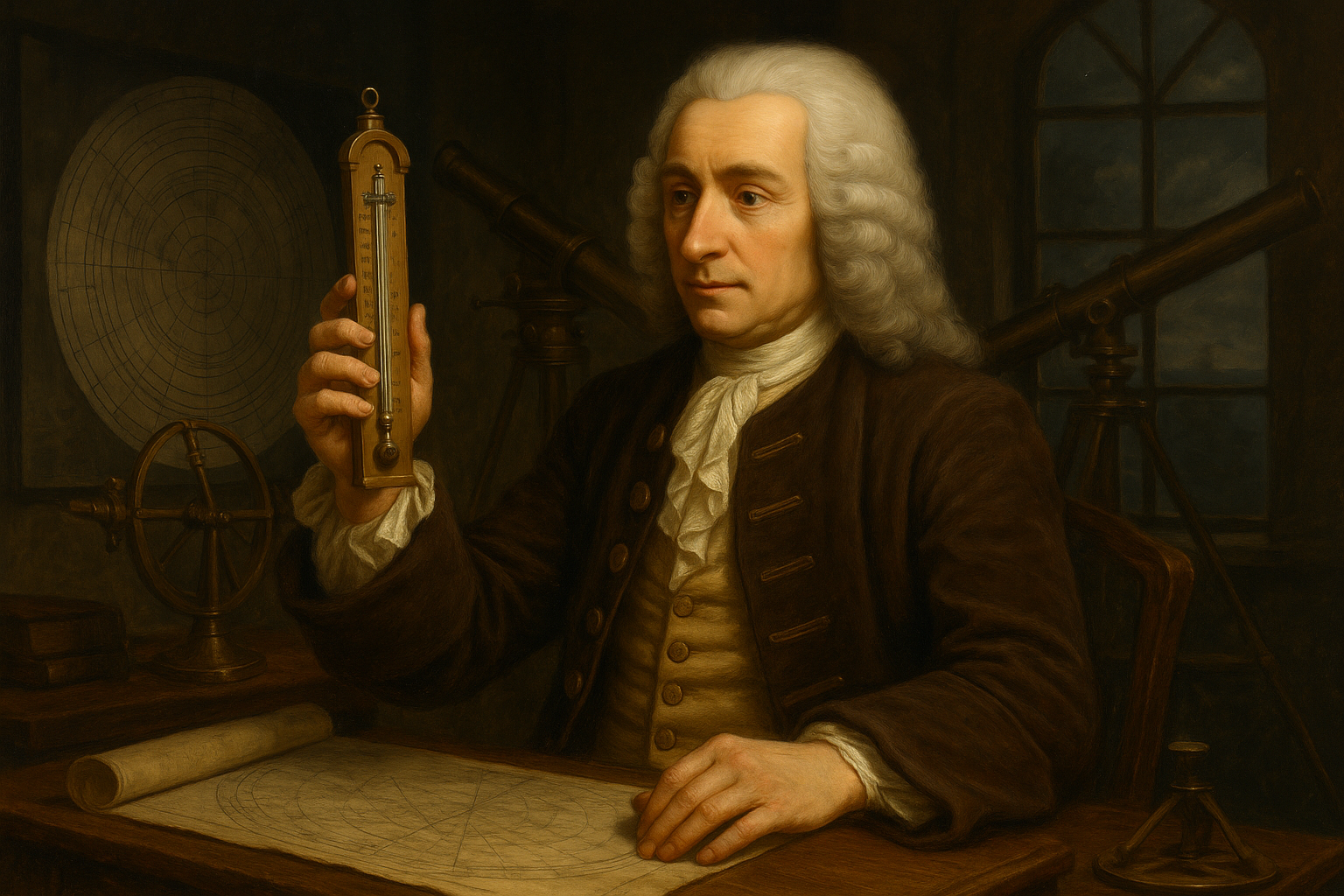
- He invented the modern thermometer scale that was later refined by his colleague Anders Celsius
- He was one of the first scientists to document ecological relationships between species
Places Associated with Linnaeus
Several historical sites preserve Linnaeus’ legacy, especially in Uppsala, where he spent much of his professional life. The Linnaeus Garden and his former residence, now a museum, attract visitors from around the world interested in the history of biology and natural science.
Frequently Asked Questions
What is Carl Linnaeus known for?
Carl Linnaeus is primarily known for creating the system of binomial nomenclature and the hierarchical classification system for plants and animals that forms the foundation of modern taxonomy. His work ”Systema Naturae” (1735) introduced this system, which standardized how scientists name and categorize living organisms. He is often referred to as the ”father of modern taxonomy” for these contributions.
When was Carl Linnaeus born and when did he die?
Carl Linnaeus was born on May 23, 1707, in Råshult, Småland, Sweden. He died on January 10, 1778, in Uppsala, Sweden, at the age of 70. He spent most of his professional life in Uppsala, where he served as a professor at Uppsala University and developed his revolutionary classification system.
What is binomial nomenclature?
Binomial nomenclature is the formal system of naming species of living organisms using two-part Latin names. The first part identifies the genus to which the species belongs, while the second part identifies the specific species within that genus. For example, humans are classified as Homo sapiens, where Homo is the genus and sapiens is the specific epithet. This system, formalized by Carl Linnaeus in the 18th century, provides a standardized way to precisely identify and discuss species across languages and cultures.
What books did Carl Linnaeus write?
Carl Linnaeus wrote numerous scientific works throughout his career. His most significant publications include ”Systema Naturae” (1735), which introduced his classification system; ”Species Plantarum” (1753), which cataloged all known plant species; ”Genera Plantarum” (1737), providing detailed descriptions of plant genera; and ”Philosophia Botanica” (1751), establishing principles of botanical taxonomy. He also published accounts of his expeditions, including ”Flora Lapponica” (1737) based on his journey to Lapland, and numerous dissertations on various aspects of natural history and medicine.